


(Urban space) The most expensive piece of land in Seoul
| Myeongdong in downtown Seoul has for a long time been leading Seoul (and the whole South Korea) in land prices. The precent record is held by a lot in Chungmuro 1-ga where Starbucks is situated: 38 million W/sq.m (25000€/sqm), or 125 million won/pyeong. (Chosun Ilbo) Myeong-dong just won't give up its position with the piece of most valuable land. Below the most expensive spot in Korea in turquoise color right on top of the Myeong-dong subway station, in a map downloaded from the Seoul new address system site. (Click for a bigger picture in a new window.) 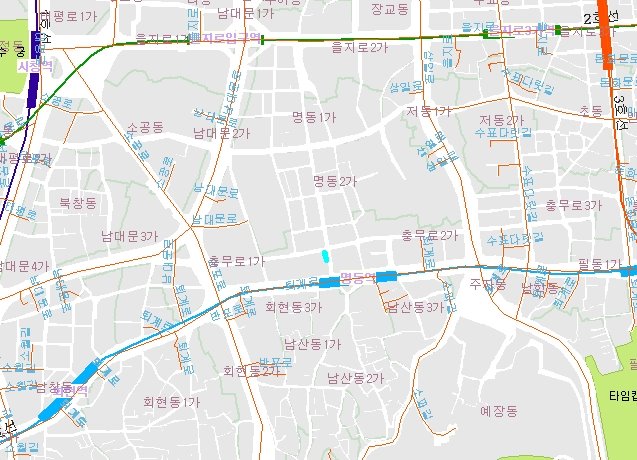  Picture taken from Seoul in Photographs 1 and Seoul in Photographs 2. Fine collection of historical photographs of Seoul. Update. The pronunciation of 本町 was Hon-machi, says a Seoul government site on Seoul history. The problem is that even in Korean-language scholarly depictions of colonial Korea, it's often given in Korean pronunciation of those characters, ponjông / bonjeong. Categories at del.icio.us/hunjang: Seoul ∙ urbanspace ∙ contemp.history |
Antti Leppänen, 11:30 AM  │
│
│
│
│
│
Comments to note "(Urban space) The most expensive piece of land in Seoul" (Comments to posts older than 14 days are moderated)
The idiosyncracies of the Japanese language mean that a definitive answer about the Japanese reading of that district is not possible.
There are two possibilities. One is Moto-machi and the other is Hon-machi. (The first uses the native Japanese reading of the first character, which the second uses the Japanized Chinese reading.) There are place names in Japan with the same characters, and the reading differs from place to place. You have to ask a local to know for sure.
Complicating matters further is that the "machi" in place names of this type (second character) also can be read as "cho", and frequently are.
There's an even cooler map of Seoul at
http://english.seoul.go.kr/residents/transport/trans_01map.html
(it has more detail and includes the names of many individual buildings).
Write a Comment